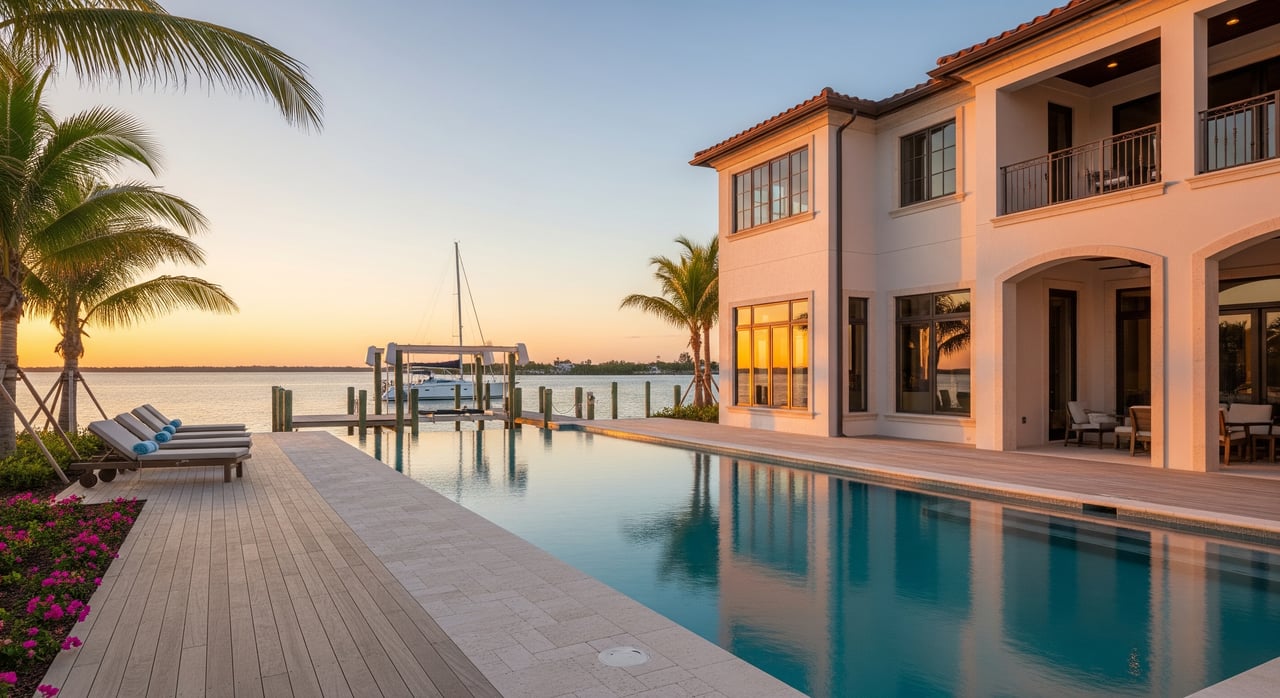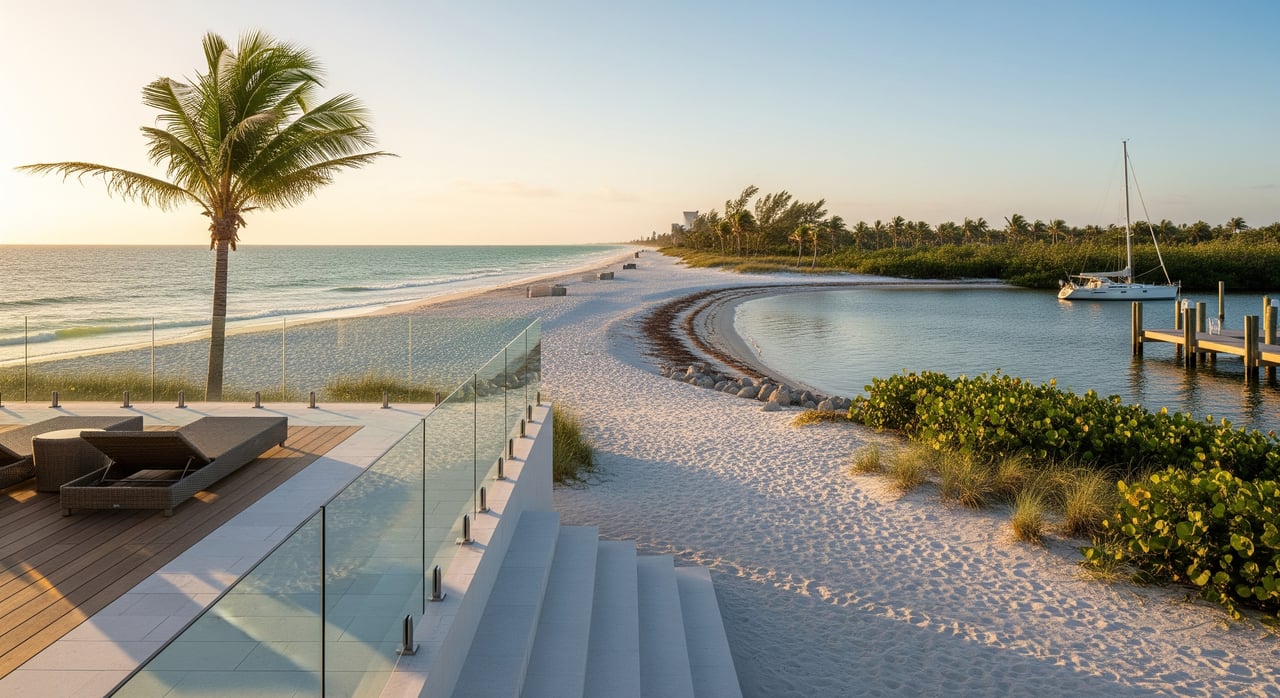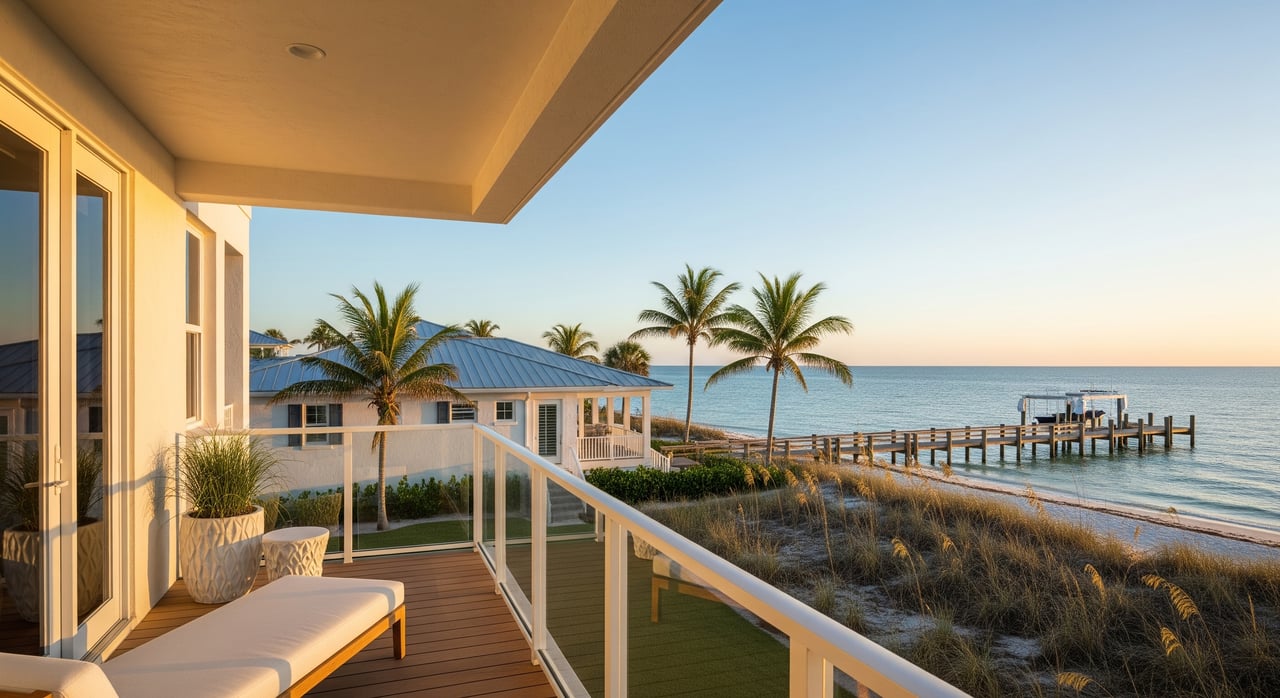
Thinking about buying or selling on Bird Key and wondering if the dock will actually work for your boat? You are not alone. Dockage can make or break the value and enjoyment of a waterfront home. In the next few minutes, you will learn how to confirm real water depth, choose the right lift, and understand access, permitting, and insurance so you can make a confident decision. Let’s dive in.
Bird Key waters: what to expect
Bird Key sits in Sarasota Bay with quick routes to the Intracoastal and the Gulf of Mexico. You will typically follow marked bay channels to reach open water. The local tidal range is modest, generally about 1 to 2 feet, but wind-driven water level changes and storm surge can temporarily shift levels.
On paper, “water access” can mean deep water on a main channel or a shallow canal behind a home. Always confirm depth at the specific dock and along your likely route. If there is an association, review covenants for any dock or lift rules before you rely on what you see from the seawall.
Depth: measure it the right way
Start with official nautical charts and tide predictions to understand surrounding channels and typical tides. Charts are a useful overview, but nearshore depths at a private dock can change from shoaling. Commission a spot sounding at the slip at low tide to see what you can actually float.
Ask which datum the depth uses. Mean Lower Low Water and Mean Low Water are not the same. Knowing the reference point helps you compare apples to apples when you look at vessel draft and safe clearance.
How much depth your boat needs
Every boat is different, but here are common ranges to guide your planning:
- Small skiffs and many center consoles: about 6 to 24 inches of draft
- Bay and saltwater fishing boats: about 1 to 3 feet
- Inboard sportfishers and cruisers: about 2 to 4 feet
- Larger express yachts and trawlers: about 3 to 6+ feet
- Sailboats and performance cruisers: often 4 to 6+ feet, plus air clearance for bridges
Plan for the boat’s draft plus at least 1 to 2 feet of under-keel clearance. Add the local tidal swing and any seasonal shoaling to stay conservative.
Sedimentation and dredging basics
Shoaling is common in canals and around private docks. If depth is marginal, you may need periodic maintenance dredging. Dredging typically requires multiple permits, which can involve state sovereign submerged lands, federal review, and county approvals. Costs vary widely with volume, access, and disposal, so get local contractor estimates and review the permit scope before you budget.
For buyers, request a recent sounding and the property’s dredging history. For sellers, share depth records, the last dredge date, and any permits on file to reduce surprises during due diligence.
Boat lifts and dock options
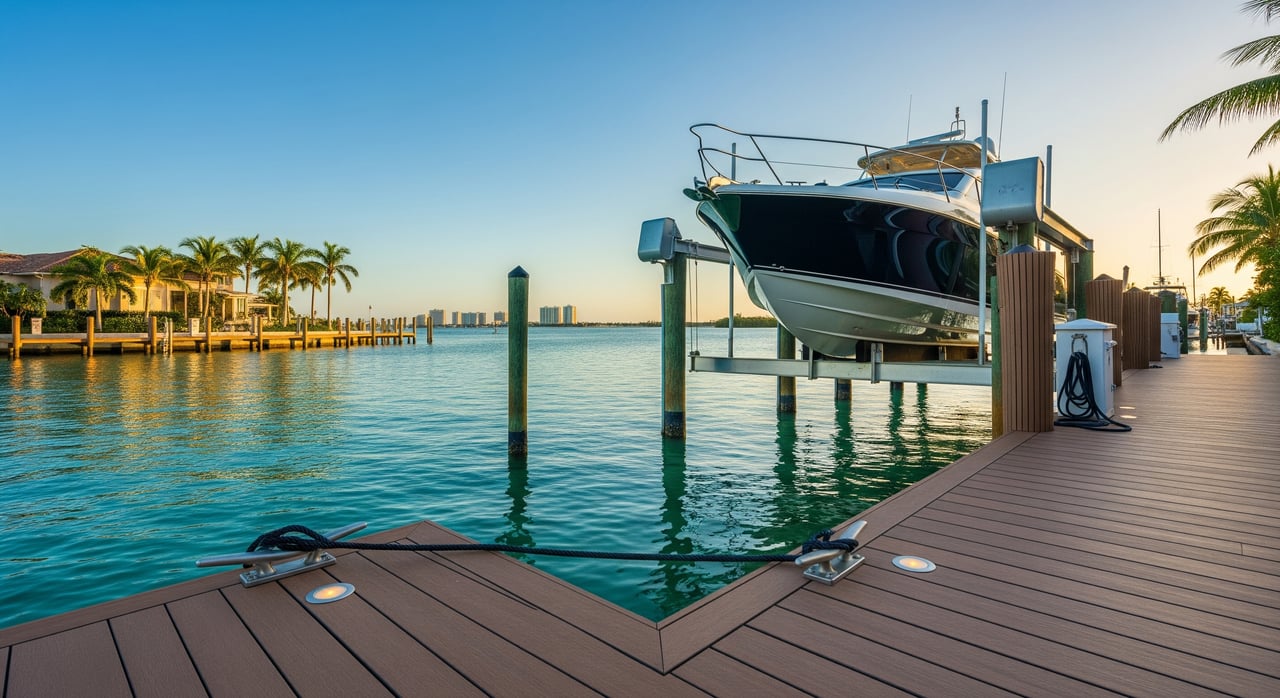
Bird Key homes commonly use fixed piling docks, floating docks, or a combination. Your choice depends on your boat, the site’s depth at low tide, and exposure to wind and wakes.
Lift types to consider
- Vertical and elevator-style lifts: lift the boat vertically, good for larger powerboats
- Hydraulic or powered lifts: smooth operation and higher capacities, higher upfront cost
- Cable or roller lifts: common and cost-effective for many recreational boats
- Floating platforms: helpful in very shallow areas for smaller boats
- PWC lifts and davits: purpose-built for jetskis or tenders
Match lift capacity, cradle spacing, and beam to your vessel. Ensure there is enough water at low tide to float onto the cradle. If you want a covered lift, confirm clearance and any community rules.
Materials, utilities, and maintenance
Marine environments are tough on metal and fasteners. Aluminum framing and galvanized or stainless components resist corrosion. Composite decking reduces maintenance compared to wood. Pilings may be treated timber, composite, or steel with concrete fill. For powered lifts, run electrical with proper GFCI protection and compliant conduit. Budget for routine inspections, lubrication, and bolt checks to prevent issues.
Costs vary by size and scope. A simple dock can be in the lower tens of thousands, while larger lifts, additional pilings, or covers often move into six figures. Bigger, more complex projects can be higher. Obtain site-specific quotes.
Access and clearance to open water
Depth at your slip is one piece. You also need a safe route to the bay.
- Bridge and vertical clearance: Sailboats and some yachts require confirmed air clearance for any fixed bridges on your route. Bascule bridges change timing and convenience.
- Channel and turning room: Large vessels need extra width for turns from canals into marked channels and for maneuvering in wind or current.
- Navigation aids: Follow marked channels and confirm maintained depths before you assume year-round access.
Seawalls, easements, and property rights
Many Bird Key lots have seawalls. Seawall condition affects dock placement and longevity, and repairs often require permits. Obtain a recent condition report if possible.
Confirm riparian rights and property lines at the water. Some properties have shared docks, community docks, or recorded access easements. Review title, surveys, and association documents to verify exclusive use before you commit.
Permits, insurance, and timelines
Dock construction, lift installation, and dredging can trigger multiple approvals. Expect to work with local building and engineering, the Florida Department of Environmental Protection for coastal activities, and the U.S. Army Corps of Engineers for dredge or federal jurisdiction. Larger projects and covered structures often take longer and may require environmental review.
Insurance treatment varies by carrier. Docks and lifts are sometimes excluded or limited under standard homeowners policies. Ask your insurer about coverage for lift equipment and dock structures, and whether they require certified installations or inspections. Bird Key properties can fall into different flood zones, so check FEMA flood maps for zone and elevation context. Wind and hurricane loads matter for structural design.
Buyer checklist
- Obtain a recent depth sounding at low tide for the slip
- Confirm the depth datum and your vessel’s draft plus clearance margin
- Review as-built dock drawings, permits, and any dredging history
- Inspect seawall condition and any required repairs
- Verify association rules for dock size, lift covers, and use
- Confirm electrical service, GFCI protection, and code compliance at the dock
- Map your route to open water for channel depth and bridge clearance
- Ask insurers about dock and lift coverage and any inspection requirements
Seller checklist
- Provide permits, as-built drawings, and service logs for the lift
- Share recent depth surveys and disclose any known shoaling
- Disclose prior storm damage, repairs, or pending maintenance needs
- Document seawall repairs, warranties, or engineer reports
- Provide any shared-dock agreements, recorded easements, or HOA approvals
Bird Key scenarios to compare
- 24 to 30 ft center console: Confirm float depth at low tide for draft plus 1 to 2 feet. A cable or roller lift is often suitable. Floating solutions can help in shallow zones.
- 40 to 50 ft motor yacht: You will need deeper water at the slip and turning room to access marked channels. Expect a higher-capacity lift or a deep wet slip. Dredging may be necessary.
- 30 to 40 ft sailboat: Confirm both water depth and vertical bridge clearances on your route. Sailboats are more constrained than similar-length powerboats.
Your next steps
- Verify depth with a professional sounding at mean low tide
- Match a lift to your actual vessel weight, beam, and hull type
- Map your route to the bay for depth and air clearance
- Gather permits, drawings, and insurance details early if you plan upgrades
If you want a clear read on a specific Bird Key property’s dockage, or you are preparing to list and want to present buyers with the right documentation, connect with Richard Strauss for a consultative review.
FAQs
What depth do I need at a Bird Key dock for a 30 ft center console?
- Most center consoles draw between about 1 and 2 feet, but you should add 1 to 2 feet of under-keel clearance and account for tidal swing, then confirm with a low-tide sounding.
How do I confirm actual depth at a private dock on Bird Key?
- Commission a spot sounding at mean low tide, verify the depth datum used, and compare it to charted depths and your vessel’s draft.
Do I need permits to dredge a private slip on Bird Key?
- Yes, dredging typically requires state, federal, and county approvals, and timelines vary with project scope and any environmental review.
What access issues should sailboat owners check near Bird Key?
- Confirm both water depth along the route and vertical bridge clearances for your mast height, and verify whether bridges are fixed or bascule.
Are docks and boat lifts usually covered by homeowners insurance?
- Coverage varies by insurer and may be limited or excluded, so ask about specific dock and lift coverage and whether certified installation or inspections are required.